The Art of the Fresh Start: Elevating Your Vegan Kitchen
There is a distinct energy that fills a kitchen when the focus shifts to Vegan Food – Adding Fresh Ingredients. It isn't merely about sustenance; it is a visual and sensory exercise in creativity. Imagine the vibrant burst of a sliced tomato, the deep emerald of fresh spinach, or the aromatic spray of chopped basil hitting a hot pan. This approach to cooking requires a mindset similar to that of a graphic designer or a brand strategist: you are composing a masterpiece from raw, elemental assets. The goal is to create a meal that is not only nutritious but visually compelling, using the inherent beauty of nature to drive the presentation.
For creative professionals, entrepreneurs, and hobbyists alike, the kitchen becomes a studio. The principles of design—contrast, balance, and color theory—apply directly to the plate. When we talk about Vegan Food – Adding Fresh Ingredients, we are discussing a style that prioritizes high-contrast visuals and organic textures. It is the culinary equivalent of a premium font family; every element must be distinct yet harmonious. The "personality" of this food style is clean, energetic, and honest. It rejects the heavy, opaque look of processed meals in favor of translucency and light. Think of a red pepper catching the light or the delicate veins of a kale leaf. These are the details that create a professional, high-end aesthetic, whether you are photographing your lunch or designing a menu for a high-end bistro.
Visual Composition: Motion, Color, and Texture
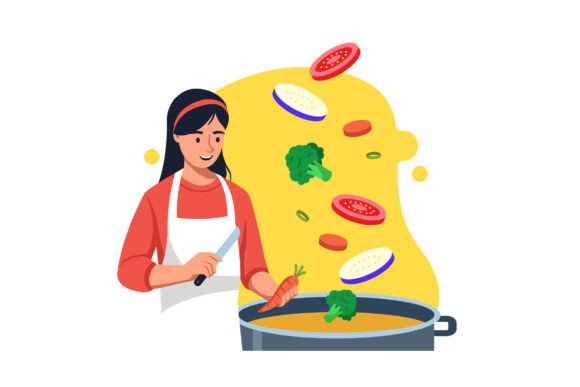
To truly master the visual appeal of Vegan Food – Adding Fresh Ingredients, one must understand the dynamics of motion and placement. Consider the illustration of a female cook in her apron, actively tossing ingredients into a pan. This is not a static scene; it is a moment of transformation. The tomatoes, greens, and herbs are suspended in mid-air, creating a sense of excitement and immediacy. For content creators and bloggers, capturing this "action shot" is essential. It communicates to the audience that the food is alive and that the cooking process is an enjoyable, creative act rather than a chore.
The color palette of fresh vegan ingredients is naturally bold. You are working with the entire spectrum of the earth: the deep reds of beets, the bright yellows of squash, the stark whites of garlic, and the varying shades of green found in herbs and lettuces. In design terms, this is a rich, saturated palette that commands attention. When applying this to brand identity or social media graphics, these colors offer a psychological cue of health, vitality, and trust. Just as a modern typography choice can signal innovation, a plate full of bright, fresh vegetables signals quality and care. The texture plays a role as well; the roughness of a mushroom, the smooth skin of an avocado, and the jagged edge of a cilantro leaf provide tactile interest that translates beautifully into close-up photography and packaging design.
Strategic Application: From Plate to Portfolio
Understanding how to deploy the concept of Vegan Food – Adding Fresh Ingredients extends beyond the dinner table. For the entrepreneur or small business owner in the food industry, this aesthetic is a powerful tool for brand perception. A brand that utilizes imagery of fresh, whole ingredients communicates transparency and professionalism. It suggests that the business values quality inputs, which translates to a quality final product. In editorial design—such as cookbooks, health magazines, or restaurant menus—using high-resolution images of fresh ingredients helps establish a clear visual hierarchy. The food becomes the focal point, while the typography and layout serve as the supporting structure, much like a sans serif font supports a complex image without cluttering the view.
For the crafter or hobbyist, this style offers a chance to experiment with creative plating techniques. Think of your cutting board as a canvas. How do you arrange the ingredients to tell a story? Do you group them by color for a gradient effect, or mix them for a chaotic, rustic feel? This is practical application of design theory. Furthermore, for those involved in web design for food blogs, the "fresh ingredients" theme dictates the user interface. It calls for clean lines, ample white space (or "negative space" in the bowl), and legible font pairing that doesn't distract from the imagery. A heavy script font might look beautiful, but if it obscures the recipe details, it fails the usability test. The goal is consistency; the freshness of the image must match the freshness of the interface.
Practical Execution and Creative Workflow
Executing the perfect fresh vegan meal is an exercise in workflow management, much like a design project. Preparation, or mise en place, is crucial. Having your ingredients washed, chopped, and ready allows you to focus on the cooking technique rather than scrambling for supplies. This mirrors the process of organizing design assets before starting a layout. When you are ready to cook, heat management is key. You want the pan hot enough to sear the vegetables—locking in color and texture—but not so hot that you burn the delicate herbs.
When assembling the dish, consider the "stack." Just as you would layer elements in a logo design, layer your food. Start with a base of grains or greens, add the heavier cooked vegetables, and top with the raw, high-color elements like fresh parsley or a squeeze of lemon. This creates depth. For those documenting their meals, lighting is the final piece of the puzzle. Natural light, coming from a window to the side, mimics the "studio" environment best, highlighting the translucency of lettuce leaves and the sheen on olive oil. This attention to detail ensures that your Vegan Food – Adding Fresh Ingredients project looks professional, whether it is intended for a personal portfolio or a commercial client.
Ultimately, embracing Vegan Food – Adding Fresh Ingredients is about recognizing the potential in raw materials. It is about taking simple elements—tomatoes, greens, herbs—and applying skill, heat, and creativity to transform them into something greater than the sum of their parts. For the designer, marketer, or creator, the kitchen offers a low-stakes environment to practice high-level concepts like composition, timing, and sensory appeal. The result is a meal that not only nourishes the body but inspires the mind, proving that creativity is a skill that translates across all mediums, from the digital screen to the dinner table.